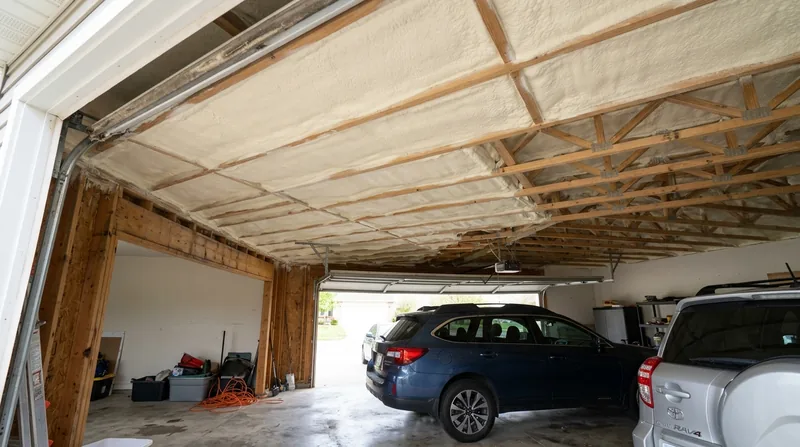




Rooms over garages are a chronic weak point in Columbia's housing stock, and they hit hardest in the seasons when you need them most. In summer, the garage below bakes in the heat, and that thermal load radiates upward through an uninsulated or poorly insulated ceiling into the bedroom or office above, pushing your air conditioning to work overtime. In winter, the garage stays cold, and the temperature difference creates drafts that seep into living space and drive your heating bills higher. Garage spray foam insulation in Columbia stops both problems at once by sealing the garage ceiling, walls, and door header with a continuous thermal and air barrier. We have been doing this work since 2014, and we know the homes and the climate here. A free written estimate with R-value and thickness specifications is how we start every job.
Why Garage Spray Foam Insulation Matters in Columbia's Mixed-Humid Climate
Columbia sits in IECC climate zone 4A, mixed-humid, which means your home faces moisture pressure from two directions. Hot, humid summers push moisture inward through walls and attics, and cold winters reverse that drive and push moisture back out. A garage ceiling with fiberglass batts or no insulation at all does nothing to stop that moisture or the temperature swings. The result is a room that is uncomfortable most of the year and an HVAC system that runs harder than it should. Spray foam seals the air and controls the moisture in one step.
- We seal the garage ceiling to stop heat transfer and drafts between the garage and the room above.
- We insulate the garage walls, especially the rim and band joist areas where older homes lose the most heat in winter.
- We foam the garage door header and frame to eliminate the cold draft that leaks around the door when it opens.
- We create a continuous air barrier that reduces the load on your heating and cooling system year-round.
A properly sealed garage ceiling also protects your HVAC ducts and ductwork if they run through the garage space, a common setup in many Columbia homes that sit over basements or crawl spaces.
Local example: A homeowner in Ashland with a 1970s ranch and a finished bedroom over the garage reported that the room swung 15 to 20 degrees between seasons even with the bedroom door closed. After we foamed the garage ceiling and walls, the room stayed within 5 degrees of the rest of the house and the bedroom air conditioner ran half as often.
For more on how air sealing protects your whole home envelope, see our air sealing service page. You can also learn more about attic spray foam insulation, which follows the same principle at the top of your home.
How We Install Garage Spray Foam Insulation in Columbia
The installation process is straightforward and takes a day or less for most garages. We start with a site inspection to measure the garage ceiling, walls, and door header, and to identify any moisture, leaks, or structural issues that need to be addressed before we spray. If the substrate is wet, contaminated, or leaking, we fix the moisture first or we walk away. Once the space is ready, we spray the foam in multiple thin passes to build up the specified R-value and thickness without overfilling or bridging gaps. We control the manufacturer drum temperature and ratio throughout the job, and we run mechanical ventilation during cure. The re-entry window is twenty-four to forty-eight hours, and we provide written instructions for that period.
- We measure and document the square footage and any obstacles such as electrical boxes, plumbing, or structural members.
- We prepare the space by sealing off the living area above and protecting floors, walls, and any items that need to stay clean.
- We spray the foam in thin, controlled passes, checking thickness and coverage as we go.
- We allow the foam to cure fully before we clean up and restore access to the garage.
- We provide a written estimate with R-value and thickness specifications before we start, and a final report with the same details when the job is done.
The whole process is cleaner and faster than removing old insulation and installing batts, and the result is a much tighter seal. Most garage jobs in Columbia are finished in a single day.
Real scenario: A homeowner in Hallsville had a garage with 1970s fiberglass batts that had settled and developed gaps. We removed the old insulation, sealed the rim joist and top plate with closed-cell foam, and then sprayed open-cell foam on the garage ceiling to R-30. The room above went from drafty and cold in winter to stable and comfortable, and the heating bill for that zone dropped by about 20 percent.
For details on the difference between closed-cell and open-cell foam, see our closed-cell spray foam page and open-cell spray foam page. If your garage insulation has failed or needs replacement, we also offer insulation removal and replacement services.
Garage Spray Foam Insulation Methods: Choosing the Right Approach
| Approach | Description | Best For |
|---|---|---|
| Closed-Cell Spray Foam | High-density foam that cures to a rigid, vapor-impermeable barrier. R-value around 6.5 per inch. Adds structural strength and stops air and moisture in one layer. | Garage ceilings in older Columbia homes where rim joists are weak, or where the garage sits over a damp crawl space and moisture control is critical. |
| Open-Cell Spray Foam | Lower-density foam that cures soft and flexible. R-value around 3.5 per inch. Allows some moisture vapor to pass through. Lower cost than closed-cell. | Garage ceilings in newer construction or where the garage is conditioned or climate-controlled, and where cost matters more than vapor impermeability. |
| Rim Joist and Band Joist Sealing | Closed-cell foam applied to the rim band where the garage frame meets the foundation. Creates a thermal break and stops cold air infiltration at a key leak point. | All garages, especially in Centralia, Ashland, and other areas with 1950s to 1980s homes where rim joists are exposed and uninsulated. |
| Garage Door Header and Frame | Spray foam applied around the garage door opening to seal the header, sides, and frame. Stops cold drafts and air leakage when the door is closed. | Any garage in Columbia where the room above is occupied or conditioned, and where you want to stop the cold draft that enters when the door cycles. |
The choice between closed-cell and open-cell depends on your climate, your moisture profile, and your budget. In Columbia's mixed-humid climate, closed-cell is the safer choice if moisture is a concern. Open-cell costs less and works fine in a climate-controlled garage. We discuss both options in your free estimate.
Garage Spray Foam Insulation Cost in Columbia: What to Expect
Garage spray foam insulation in Columbia starts at around $1,200 for a small single-car garage with a basic ceiling foam job. The final cost depends on several real factors: the square footage of the ceiling and walls, the R-value you choose, whether you need old insulation removed first, the condition of the substrate, and access. A two-car garage with rim joist sealing and a new garage door header typically runs $2,000 to $3,500. If you need extensive substrate repair, moisture mitigation, or structural work before we can spray, the cost moves higher and we discuss it in the estimate.
We always provide a written estimate with R-value and thickness specifications before we start work. The estimate includes labor, materials, and travel within Columbia and the surrounding service area. We do not charge per board foot or per square foot on a fixed rate, because every garage is different. Two estimates from two contractors will often differ significantly, and that is normal. We recommend getting two or three written estimates so you can compare specifications, not just price.
For a full pricing overview and details on what affects cost, see our pricing page. Call us at (573) 685-4104 for a free estimate with no obligation to book.
What to Look for When Hiring a Garage Spray Foam Insulation Contractor Near Me in Columbia
Spray foam insulation is a specialized trade, and the difference between a good installation and a bad one is not always obvious until months after the work is done. When you are evaluating contractors, look for a few clear signals. First, ask for a written estimate that includes the R-value and thickness of the foam, measured in inches. If a contractor gives you a price with no R-value and no thickness, that is a red flag. Second, ask about the installation process: mechanical ventilation during cure, controlled drum temperature and ratio, and a stated re-entry window of twenty-four to forty-eight hours. If a contractor promises immediate re-entry or says the smell will go away in a few hours, they are not following best practice. Third, verify that the contractor carries full insurance and can provide a certificate of insurance. Fourth, check references and ask previous customers about the quality of the work and whether any issues came up after the job was done.
For spray foam work in Columbia, you should also ask whether the contractor is familiar with local building code and whether permits are required at your address. Permitting and thermal barrier rules vary by city and are governed by the local building department, not by us. We help homeowners navigate what applies at their address, and we work with the building inspector if a permit is needed. If you have an HOA, check your architectural rules to make sure spray foam work on garage walls or the door header does not require approval.
The best way to start is a free, no-obligation estimate. Call us at (573) 685-4104 or visit our contact page to request one. We respond within 24 hours and we answer your questions before you commit to anything.
Garage Spray Foam Insulation in Columbia: Pricing Guide
| Service | Price | Details |
|---|---|---|
| Single-car garage ceiling only | Starting at $1,200 | Spray foam ceiling to R-30 with standard access, no old insulation removal or substrate repair needed |
| Two-car garage with ceiling and rim joist sealing | Starting at $2,000 | Ceiling foam plus closed-cell rim and band joist sealing where the frame meets foundation, typical for older Columbia homes |
| Garage ceiling, walls, and door header with insulation removal | Starting at $2,800 | Complete garage envelope sealing plus removal and disposal of old fiberglass or deteriorated insulation before spraying new foam |
| Large or complex garage job with substrate prep or moisture work | On estimate | Garages with wet substrates, extensive structural issues, or special access challenges require an on-site inspection before pricing |
| Travel and service area | Included | No separate mileage fee or call-out charge in Columbia and surrounding Boone County service areas |
| Free written estimate | No charge | Response within 24 hours at (573) 685-4104, includes R-value and thickness specs, no obligation to book |
Indicative pricing, the exact cost depends on square footage, finish, and site access. Free personalized estimate within 24h at (573) 685-4104.


