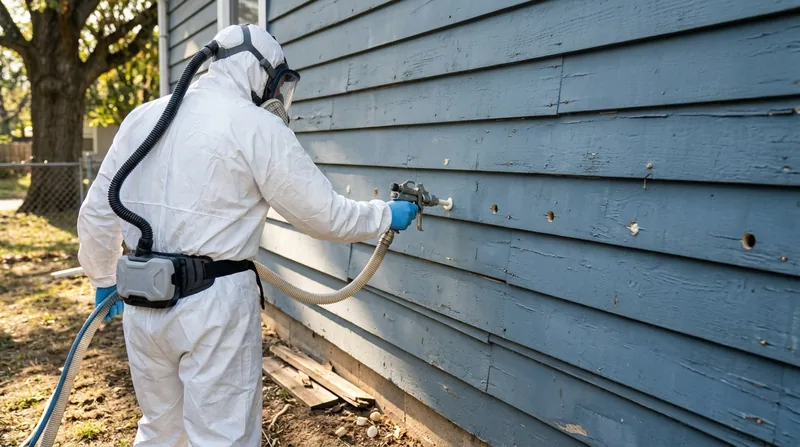




Columbia's older homes near downtown and the University of Missouri campus often feature balloon-framed walls built before modern insulation standards took hold. Many of these houses, along with mid-century ranches across established neighborhoods, lose heat steadily through uninsulated wall cavities during cold Missouri winters. Wall and injection foam insulation lets you seal those cavities without tearing out finished walls or siding, cutting drafts and evening out room temperatures from the inside. This is especially valuable in Boone County's mixed-humid climate, where hot summers push moisture inward through walls and cold winters reverse that drive, stressing wood framing and ductwork alike. We inject closed-cell or open-cell foam directly into closed cavities to create an air barrier and thermal layer without the mess of demolition. Our work is fully insured, and we help you navigate what permits and thermal barrier rules apply at your address.
Why Wall and Injection Foam Insulation Matters in Columbia's Older Housing Stock
Columbia's downtown core and neighborhoods near campus are filled with homes built between 1920 and 1970, when builders left wall cavities empty or filled them with sawdust, newspaper, or nothing at all. These balloon-framed structures have shallow rim joists, poor top-plate sealing, and hollow walls that become cold-air highways in January. The mixed-humid climate of Boone County compounds the problem: moisture-laden summer air penetrates the walls, and winter cold reverses the flow, stressing the wood frame. Rather than remove drywall or siding, injection foam lets you pressurize the cavity from outside or inside, filling voids completely and creating a continuous air seal. This is the renovation tool for homes that cannot tolerate a gut remodel.
- Inject foam into closed wall cavities without opening finished walls or siding.
- Seal balloon-framed walls common in downtown Columbia and Ashland to stop drafts at the rim and top plate.
- Control moisture movement in mixed-humid climate by breaking the air pathway that drives condensation in winter.
- Achieve R-values of 3.6 to 6.0 per inch depending on foam type, specified in writing before work begins.
- Verify that your city's building department permits the thermal barrier and ignition barrier required for your foam type and thickness.
Injection foam is the answer when a home's walls are sound but uninsulated, and demolition is not an option.
Local example: A 1950s ranch in south Columbia with balloon framing and no wall insulation loses heat steadily through the rim joist and top plate. Injection foam into the cavities, paired with rim joist sealing, cuts heat loss and evens room temperatures without removing siding or drywall.
For detailed guidance on what your city requires, visit the City of Columbia Building and Planning Department to confirm thermal barrier and ignition barrier rules for your address.
How We Inject Foam Insulation into Walls: Our Process in Columbia
Injection foam work begins with a site inspection to map the cavity layout, identify blocking and utilities, and determine the best access points. We drill small holes (typically 1 to 2 inches) into the wall cavity from the exterior or interior, depending on what the structure allows and what your contractor prefers. We then inject foam at a controlled rate, filling the cavity completely without overpressurizing the wall. The foam expands slightly to seal voids and cracks, then hardens in place. Once cured, we patch the access holes. The entire process takes one to three days depending on the wall area and cavity complexity. Mechanical ventilation runs during cure to manage off-gassing, and we recommend a 24 to 48-hour re-entry window before occupancy resumes.
- We inspect the wall cavity to identify utilities, blocking, and the best injection points.
- We drill small access holes and inject foam at the manufacturer's specified pressure and ratio.
- We monitor thickness and coverage to meet the R-value and thermal barrier requirements stated in your estimate.
- We run mechanical ventilation during cure to control odor and off-gassing.
- We patch access holes and clean up after the foam hardens, typically within 24 hours.
The result is a continuous air barrier and insulation layer inside the wall, with no exterior demolition or siding removal.
Example in Hallsville: A 1960s colonial with uninsulated walls and cold bedrooms gets injection foam into the rim joist and first-floor cavities. We drill from the exterior band board, inject closed-cell foam to R-15, and patch. Heating bills drop noticeably the next winter, and rooms stay more even in temperature.
Learn more about air sealing and how injection foam works alongside rim joist and rim board sealing to stop heat loss at the foundation.
Wall and Injection Foam Insulation Methods: Closed-Cell vs. Open-Cell
| Approach | Description | Best for |
|---|---|---|
| Closed-Cell Injection Foam | High-density foam (1.5 to 2.0 lb/cu ft) injected into cavities, cures hard and rigid, R-value 3.6 to 6.0 per inch, acts as vapor barrier. | Balloon-framed walls in mixed-humid climates where moisture control and structural rigidity matter; rim joists; walls exposed to weather or high humidity. |
| Open-Cell Injection Foam | Lower-density foam (0.5 to 1.0 lb/cu ft) injected into cavities, cures soft and flexible, R-value 3.5 per inch, breathable (not a vapor barrier). | Interior wall cavities in conditioned spaces where cost is a priority and vapor diffusion is acceptable; sound dampening in partition walls. |
| Cavity Fill (Low-Pressure) | Foam injected slowly into wall cavities at low pressure to minimize stress on framing, especially important in older homes with weak or settling walls. | Historic or balloon-framed homes where high-pressure injection risks cracking plaster or shifting framing; Centralia and Jefferson City historic districts. |
| Retrofit Injection with Density Control | Foam injected into existing cavities with real-time monitoring of density and thickness to match R-value spec and building code thermal barrier rules. | Any retrofit where code compliance and workmanship warranty are required; documented R-value and thickness in writing before work starts. |
Wall and Injection Foam Insulation Cost in Columbia: What to Expect
Wall and injection foam insulation typically starts at $2 to $4 per square foot of cavity area being filled, depending on foam type, wall configuration, and access. Closed-cell foam costs more than open-cell because of its higher density and vapor-barrier properties, but it is the right choice for rim joists and exterior walls in Columbia's mixed-humid climate. Access matters significantly: walls that are easy to reach from the exterior or interior, with clear cavity runs and no utilities in the way, cost less to inject than walls with complex framing, multiple blocking layers, or electrical and plumbing in the cavity. Older homes in downtown Columbia and Ashland often have shallower cavities and tighter spacing, which can require slower injection rates and more drilling points, raising the per-square-foot cost. A typical retrofit of a single-story rim joist and first-floor walls in a 1,500-square-foot house ranges from $1,500 to $4,000, depending on cavity size and foam type.
Getting two or three written estimates from fully insured contractors is the best way to understand what applies to your home. Each estimate should specify the foam type (closed-cell or open-cell), the target R-value per inch, the thickness in inches, and the total board feet of foam. If an estimate omits R-value and thickness, walk away; that contractor is not being transparent about what you are buying. Some jobs are also preconditioned on removing and replacing old, failed insulation if it is in the way. Visit our pricing page for more detail on what moves the cost up or down.
What to Look for When Hiring a Wall and Injection Foam Insulation Contractor Near Columbia
Hiring the right spray foam contractor is the single biggest factor in a successful retrofit. The market includes rig-and-run crews from out of state (a job sprayed in an afternoon, nobody reachable when the smell will not go away) and national franchises with inconsistent local oversight. A local contractor with a local address and local plates, in business since before 2014, is your best bet. When you call, ask for a written estimate that includes the foam type, R-value per inch, thickness in inches, and the total board feet. Ask whether the contractor is fully insured and ask to see a certificate of insurance. Verify that they understand the thermal barrier and ignition barrier rules that apply at your address; the fifteen-minute thermal barrier distinction is the one most generalists get wrong, and naming it correctly is itself the expertise signal. Ask about mechanical ventilation during cure and the re-entry window they recommend. Call two or three references and ask whether the contractor was reachable after the job and whether the smell was manageable. If your home is in an HOA, check whether architectural rules govern exterior drilling or patching. For details on what to ask, contact us for a free estimate and a conversation about what applies to your home.
The strongest position you can take as a homeowner is to understand the difference between closed-cell and open-cell foam, to know the R-value and thickness you need, and to demand that the contractor state those figures in writing before work starts. That single step eliminates 90% of the bad installations in the market.
Wall & Injection Foam Insulation in Columbia: Pricing Guide
| Service | Price | Details |
|---|---|---|
| Closed-Cell Injection Foam | Starting at $3/sq ft | High-density foam, R-value 3.6 to 6.0 per inch, vapor barrier, best for rim joists and exterior walls in mixed-humid climate |
| Open-Cell Injection Foam | Starting at $2/sq ft | Lower-density foam, R-value 3.5 per inch, breathable, cost-effective for interior walls and sound dampening in conditioned spaces |
| Rim Joist and Top-Plate Retrofit | On estimate | Closed-cell injection into band board and top plate cavities, complexity depends on balloon framing, utilities, and access difficulty |
| Full-Wall Cavity Fill (1,000+ sq ft) | On estimate | Multiple access points, blocking layers, and utility avoidance require site inspection to determine drilling strategy and foam volume |
| Travel and Setup | Included | No separate fee in Columbia and surrounding Boone County areas; mileage factored into estimate for Fulton, Ashland, Hallsville, Centralia |
| Free Written Estimate | No obligation | R-value and thickness specified in writing, response within 24 hours at (573) 685-4104, fully insured and professional crew |
Indicative pricing, the exact cost depends on square footage, finish, and site access. Free personalized estimate within 24h at (573) 685-4104.


