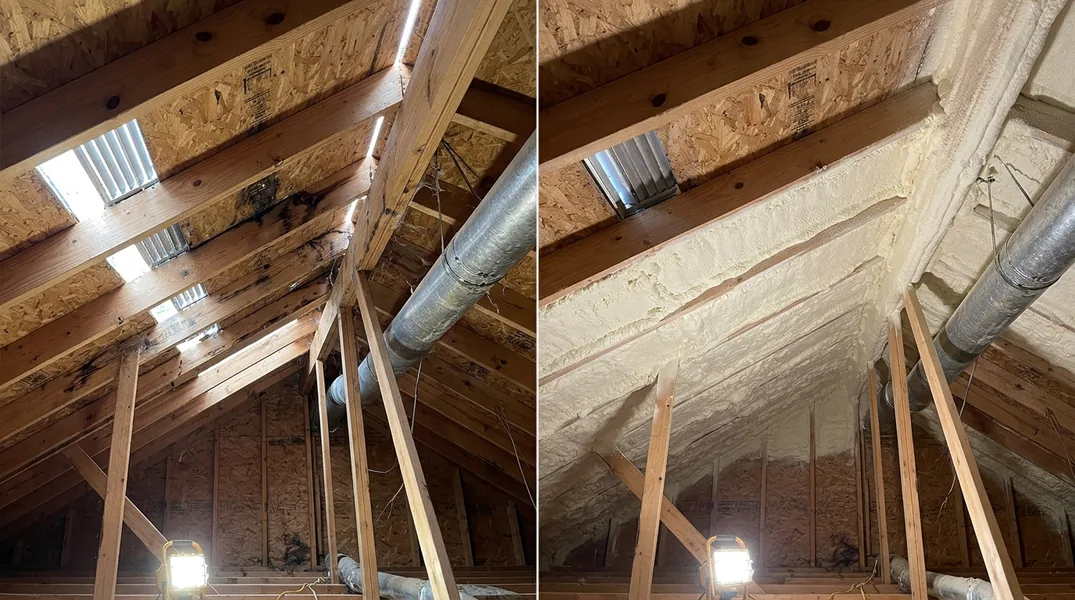
Understanding Spray Foam Insulation Types
When it comes to attic spray foam insulation, homeowners in Columbia have two primary options: open cell and closed cell spray foam. Both materials are applied as liquid and expand to fill cavities, but they differ significantly in structure, performance, and cost. Understanding these differences is essential for making an informed decision about your home's insulation needs.
Spray foam insulation has become increasingly popular in recent years because it provides superior air sealing compared to traditional fiberglass or cellulose. When properly installed, spray foam creates an airtight barrier that reduces air leakage, improves energy efficiency, and can help regulate moisture. However, the choice between open cell and closed cell depends on your specific situation, local climate conditions, and budget constraints.
What Is Open Cell Spray Foam?
Open Cell Spray Foam Insulation has a lower density and is softer than its closed cell counterpart. The cells within the foam are not completely enclosed, which means air and moisture can move through the material. This characteristic makes open cell foam more flexible and easier to work with during installation, particularly in tight or irregular spaces. The R-value per inch is typically lower, ranging from 3.5 to 3.6, meaning you need more thickness to achieve the same insulation performance as closed cell foam.
One of the main advantages of open cell foam is its cost effectiveness. It generally costs less per board foot than closed cell foam, making it an attractive option for budget conscious homeowners. Open cell foam is also an excellent air sealer and provides good sound dampening properties, which can reduce noise transmission through walls and ceilings. Additionally, because it allows moisture vapor to pass through, open cell foam is often recommended in applications where moisture management is important. However, it does not provide a moisture barrier, so it works best in applications where the building envelope already has adequate vapor protection.
What Is Closed Cell Spray Foam?
Closed Cell Spray Foam Insulation features a denser structure with cells that are completely enclosed and tightly packed together. This design creates a superior insulation material with an R-value of approximately 6.0 to 6.5 per inch, nearly double that of open cell foam. Because the cells are closed, the foam is impermeable to air and moisture, making it an excellent choice for creating a fully sealed attic insulation system. The denser composition also provides greater structural strength and can help reinforce roof assemblies.
The primary drawback of closed cell foam is its higher cost compared to open cell options. However, many homeowners view this as a worthwhile investment because of the superior insulation performance and moisture barrier properties. Closed cell foam is particularly valuable in humid climates or in areas prone to moisture infiltration. It also provides better protection against air leakage and can contribute to improved indoor air quality by preventing outside pollutants and allergens from entering through gaps and cracks. For homeowners seeking a sealed attic insulation solution, closed cell foam is often the preferred choice.
Climate Considerations for Columbia, MO Homes
Columbia experiences a humid subtropical climate with warm, humid summers and cold winters. This climate pattern is an important factor when choosing between open cell and closed cell spray foam. The temperature fluctuations and seasonal humidity changes mean that your attic insulation must handle both extreme heat and cold, as well as moisture challenges from outdoor humidity and indoor activities like cooking and bathing.
For Columbia area homes, closed cell foam offers distinct advantages due to its moisture barrier properties and superior R-value. The ability to create a completely sealed attic prevents moisture from entering the attic space during humid summer months, which can otherwise lead to mold growth, wood rot, and structural damage. Additionally, the higher R-value means you achieve better insulation performance with less material thickness, which can be important in attics with limited space. However, if your budget is more constrained and your home's existing vapor barriers are adequate, open cell foam can still provide good performance when installed correctly. The key is ensuring proper installation and ventilation design for your specific home.
Attic Spray Foam Insulation Cost in Columbia: What to Budget
The cost of spray foam attic insulation varies depending on several factors, including the type of foam selected, the size of your attic, existing insulation that needs removal, and local labor rates. Open cell foam typically costs between 40 cents and 65 cents per board foot, while closed cell foam ranges from 1.00 to 1.50 dollars per board foot. For a typical 1,500 square foot attic, an open cell installation might cost between 2,500 and 4,000 dollars, whereas closed cell could range from 4,500 to 7,500 dollars or more.
While closed cell foam represents a larger upfront investment, many homeowners find the long term energy savings justify the expense. Closed cell foam's superior R-value means your heating and cooling systems work more efficiently, potentially reducing energy bills by 15 to 20 percent or more. When you factor in these savings over 10, 15, or 20 years, the initial cost difference becomes less significant. To get an accurate pricing estimate for your specific home, it's best to contact a local professional who can assess your attic's unique characteristics and provide a detailed quote.
Unvented Attic Spray Foam: Creating a Sealed Attic Space
One of the most significant benefits of spray foam insulation is the ability to create an unvented attic spray foam system. Traditional attics rely on ventilation to manage moisture and temperature, but this approach has limitations. Ventilation allows conditioned air to escape during winter and permits outside heat and humidity to enter during summer, reducing energy efficiency. By applying spray foam directly to the roof deck and sealing all air leaks, you transform your attic into a conditioned space that is part of your home's thermal envelope.
An unvented attic spray foam system offers multiple advantages beyond improved insulation. It provides better moisture control, reduces the risk of ice dams in winter, allows you to safely store items in the attic without worrying about temperature extremes, and can even provide additional living space potential. Closed cell foam is the ideal choice for unvented attics because it provides the necessary moisture barrier and structural support. This approach has become increasingly popular among homeowners seeking maximum energy efficiency and year round comfort.
Which Type Is Right for Your Columbia Home?
Choosing between open cell and closed cell spray foam ultimately depends on your priorities, budget, and specific home conditions. If energy efficiency and moisture control are your primary concerns, and you have the budget for it, closed cell foam is the superior choice. It provides better insulation performance, acts as a moisture barrier, and creates a truly sealed attic space. This option is particularly recommended for homes in humid climates like Columbia or for homeowners who plan to stay in their homes for many years and want to maximize long term savings.
If you're working with a tighter budget and your home already has adequate vapor barriers and ventilation considerations, open cell foam can provide good insulation performance and air sealing at a lower cost. Open cell foam is also a good choice if you're insulating interior walls or other applications where moisture permeability is beneficial. The best approach is to consult with a professional who understands Columbia's climate and can evaluate your specific attic conditions. Contact Columbia Spray Foam Insulation at (573) 685-4104 to schedule a free estimate and discuss which option makes the most sense for your home.
Looking for a professional spray foam insulation contractor in Columbia? Columbia Spray Foam Insulation responds fast for all your spray foam insulation needs.
Get a Free Quote